
Choosing flooring room by room
Flooring covers more of a room than anything else, so it does more to set the look than almost any other choice. It also has to cope with very different conditions from room to room: muddy boots in the hall, spills in the kitchen, standing water in the bathroom. This guide compares the common types and suggests what tends to work where.
The main types at a glance
- Luxury vinyl tile (LVT) and rigid-core vinyl. Waterproof, warm and quiet underfoot, and convincing wood and stone looks. Good in kitchens, bathrooms and halls. Quality varies a lot: look at the thickness of the wear layer, which determines how long it lasts in heavy traffic.
- Laminate. A printed image under a tough clear layer on a fibreboard core. Hard-wearing and affordable, but the core can swell if water gets into the joints, so standard laminate is risky in bathrooms. Some products are sold as water-resistant; check what the warranty actually covers.
- Engineered wood. A real hardwood top layer bonded to a stable plywood or softwood base. Looks and feels like solid wood, copes better with temperature and humidity changes, and most products are suitable over underfloor heating. A thicker top layer means it can be sanded and refinished more times.
- Solid wood. Can be sanded many times and lasts decades, but moves with humidity, so it is less suited to kitchens, bathrooms, conservatories and underfloor heating.
- Porcelain and ceramic tile. Waterproof and very durable. Cold and hard underfoot unless combined with underfloor heating, and needs a rigid, level subfloor to avoid cracked tiles or grout.
- Carpet. Warm, quiet and comfortable. Best in bedrooms and on stairs; less practical in kitchens, bathrooms and busy entrances.
Room by room
| Room | Usually works well | Think twice about |
|---|---|---|
| Hall and entrance | Porcelain tile, LVT | Light carpet, soft solid wood |
| Kitchen | LVT, porcelain tile, some engineered wood | Standard laminate, solid wood |
| Bathroom | Porcelain tile, LVT | Laminate, any wood |
| Living room | Engineered or solid wood, LVT, carpet | Very cold tile without heating |
| Bedroom | Carpet, wood, LVT | Anything noisy in upstairs rooms without good underlay |
Practical points that decide more than looks
- The subfloor. Almost every floor needs a flat, dry, sound base. Uneven floorboards may need overboarding with plywood; a damp concrete slab needs a damp-proof membrane. Ask your fitter to check before you buy.
- Underfloor heating. Tile, LVT and most engineered wood work with it; check the manufacturer's maximum surface temperature and the combined thermal resistance of floor and underlay.
- Door heights and thresholds. Thick floors plus underlay can stop doors opening. Allow for trimming doors and for threshold strips between rooms.
- Acclimatisation. Wood and some vinyls need to sit in the room for a day or more before fitting. Follow the instructions or the warranty may be void.
- Flats. Many leases require acoustic underlay or forbid hard floors altogether. Check before you buy.
Getting the look right
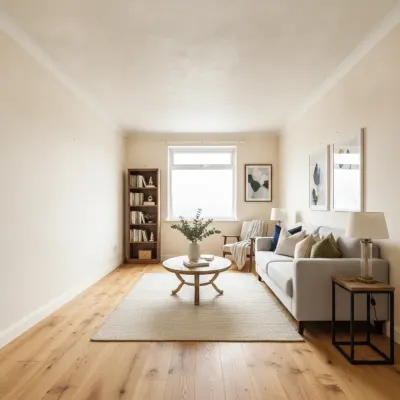
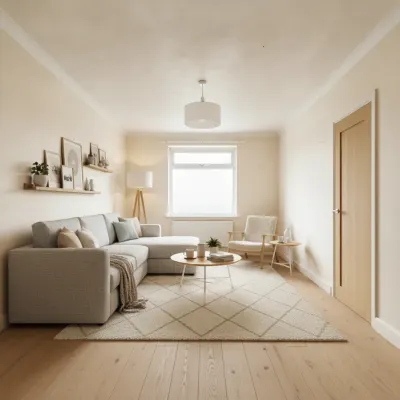
Run boards along the longest wall or towards the main window to make a room feel longer and lighter. Wide boards suit larger rooms; narrow boards or herringbone suit smaller or period rooms. Using the same floor through connected spaces (hall, kitchen, living area) makes a small home feel bigger, while a change of floor helps define zones in an open-plan room.
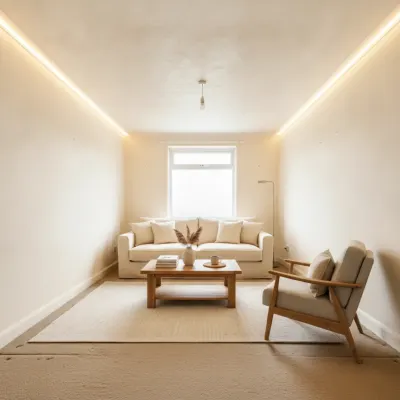
Floor colour interacts strongly with walls and furniture. A pale oak can lift a dark room; a mid-brown floor with pale walls and dark furniture can look disjointed. Seeing two or three floor options on a photo of your actual room, with your own furniture in it, is often the quickest way to rule options out before ordering samples.
Product suitability varies by manufacturer. Always follow the fitting instructions and check warranty terms for wet rooms and underfloor heating.
 Revêtement de sol
 Style de pièce complet
 Meubles