
Kitchen cabinets: paint, respray, reface or replace?
A tired kitchen does not always need ripping out. If the layout works and the carcasses (the boxes behind the doors) are sound, changing only what you can see can transform the room for a fraction of the cost and disruption of a new kitchen. This guide explains the four main options, what each one really involves, and how to tell which your kitchen is suitable for.
First, check the carcasses and the layout
Open every cupboard and look for water damage, especially under the sink and around the dishwasher: swollen, crumbling chipboard at the base is the usual sign. Check that hinges hold doors level and that drawer runners are not failing. If the carcasses are swollen or sagging, cosmetic options will not last and you are looking at replacement, at least for those units.
Then ask honestly whether the layout works. If you constantly cross the room between sink, hob and fridge, or you are short of worktop space next to the hob, no amount of paint will fix it. Cosmetic options make sense when you like how the kitchen works and dislike how it looks.
Option 1: paint them yourself
The cheapest route, and very effective on solid wood or painted MDF doors. It is a bigger job than it looks: doors and drawer fronts need removing, thorough degreasing, sanding, a primer suited to the surface and at least two top coats, with drying time between each. Expect your kitchen to be out of action for several days.
Foil-wrapped (vinyl) doors and high-gloss lacquered doors are poor candidates. Paint struggles to bond to vinyl, and foil that is already peeling at the edges will keep peeling under the paint.
Option 2: professional respray
Specialist kitchen sprayers usually take the doors away to spray in a booth and spray the fixed parts (end panels, plinths, cornice) on site with masking and extraction. The finish is smoother and tougher than brush or roller paint, and the disruption is usually a day or two in the kitchen itself.
Ask what coating they use, how it is cured, whether they can handle your door material and what guarantee they give. Look at a finished kitchen of theirs that is at least a year old if you can.
Option 3: new doors and drawer fronts (refacing)
Many suppliers make replacement doors to measure for existing carcasses, and most major kitchen ranges use standard carcass sizes, so you can often keep the boxes and swap everything you can see. This lets you change the style entirely (for example from flat gloss to a Shaker profile), not just the colour.
Measure every door carefully, note the hinge type and position, and check whether your end panels, plinths and cornice also need replacing to match. Add new handles at the same time: it is a small cost with a big visual effect.
Option 4: a new kitchen
Worth it when carcasses are failing, when the layout is wrong, or when you are moving services (sink, hob, gas, extraction) anyway. A new kitchen also brings in plumbing, electrics, worktops, appliances, tiling, flooring and plastering, so the cabinets themselves are often a minority of the total cost. Electrical work in a kitchen in England must comply with Building Regulations (Part P), so use a registered electrician who can certify it.
Choosing the colour
- Consider what stays. Your worktop, floor and splashback are usually the fixed points. A colour that clashes with a dark speckled granite worktop will look wrong however good it is on its own.
- Two-tone works well in medium and large kitchens: a darker colour on base units or the island, a lighter one on wall units to keep the room bright.
- Mind the light. Dark cabinets in a north-facing kitchen with small windows can make the room feel smaller. Under-cabinet lighting helps a great deal; see our guide to lighting a room in layers.
Seeing your shortlisted colours on a photo of your actual kitchen, with your real worktop and floor, is the quickest way to rule options out before you commit to a sprayer or order doors.
This is general guidance. Have gas, electrical and plumbing work carried out by suitably registered professionals.
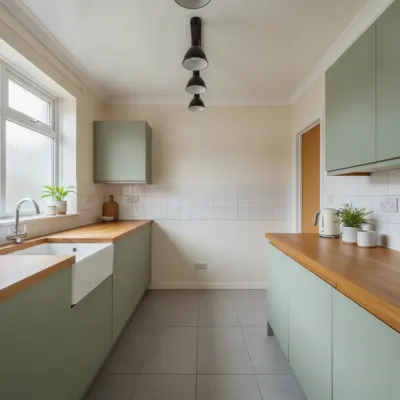 Meubles de cuisine
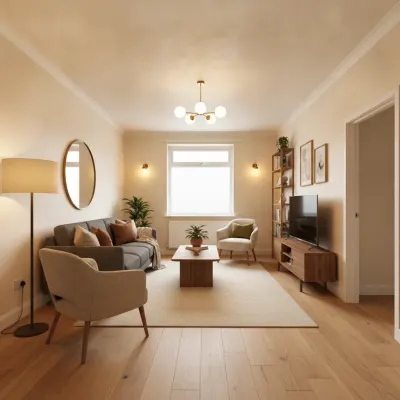 Éclairage
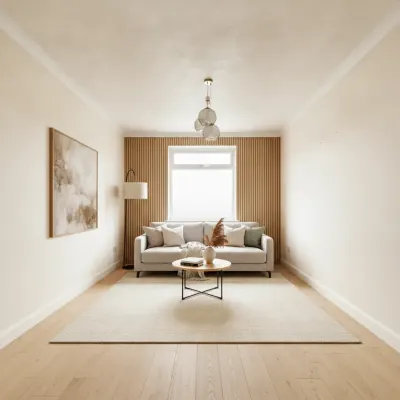 Murs